
I avoid true crime podcasts as a general rule, but Finding Samantha by Irish public service broadcaster RTÉ is thoroughly engaging. There’s no salacious hype, no rampant speculation, no over-dramatic violin crescendos. The reporting feels solid, the factual exposition of the complicated case details deftly executed, but most of all, the joint hosts – Irish Nicoline Greer and Australian Sharon Davis – narrate this convoluted tale about international fraudster Samantha Azzopardi with unexpected tenderness, making the tone of this seven part podcast more maternal than voyeuristic.
Okay, perhaps ‘maternal’ is a long bow. But the journalistic tone in the carefully scripted, studio quality narration occasionally makes way for other vocal textures, such as the tinny, thin voice messages Nicoline and Sharon leave each other to communicate across time zones. This ephemeral audio is the perfect medium for the often candid, personal reflections about the ongoing investigation.
We hear Sharon express her frustrations as she becomes stumped and bamboozled, even fearful of Samantha, the con-woman extraordinaire, who seems to continually illude Sharon with her elaborate web of lies and deceit.
Normally, I’d find this kind of over-sharing of the host’s intimate feelings contrived or disingenuous. And in so many true crime podcasts, ruminations like these detract from the narrative flow, or as was the case with the popular investigative documentary Serial, host Sarah Koenig’s personal reflections became more enticing than the actual investigation. And in The Teacher’s Pet, host Hedley Thomas’ self aggrandising verbiage was, at best, annoying.
But the deliberately (I’m guessing) crappy audio recordings made me lean in, and the sharing felt appropriate, and an effective way to get to know and trust the hosts. After all, a major theme of this podcast is about trust, and its brutal betrayal.
Finding Sue…
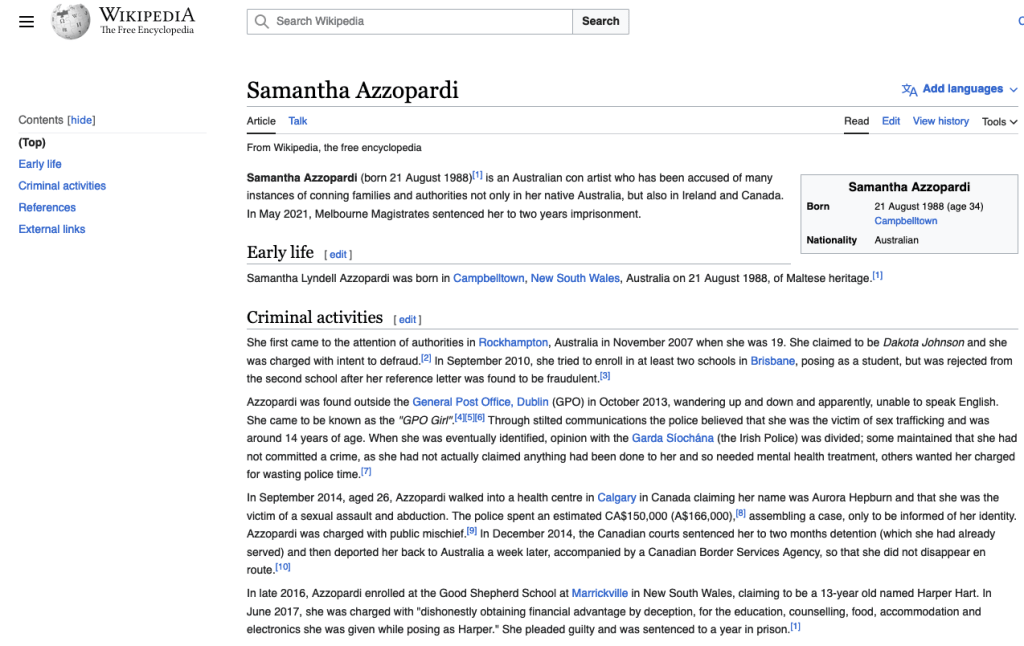
Back to the ‘maternal’ for a moment – early in Episode One: GPO Girl, when Samantha is discovered in Dublin and taken to a hospital, we hear from Sue, who just happened to be at the same hospital. Sue’s connection to this case is too fleeting to be noteworthy, and I wondered why we hear so much from her (apart from having our ears massaged by the mellifluous Irish accent). Perhaps Samantha’s victims refused to be interviewed, and the producers had little choice but to include voices peripheral to the story, like Sue’s?
By the end of the series, it’s evident that many of the people Samantha defrauded chose not to speak on record. Yet I sense that the producers deliberately selected Sue to be one of the first characters we encounter because she’s instantly sucked in, wants to care for the vulnerable-looking Samantha, even take her home. Sue becomes invested, and so did I. Meeting Sue seemed to me like permission to also feel concern for Samantha. And it’s significant that we find out in subsequent episodes that the people Samantha hurt most are the ones who cared for her, took on a maternal role in her life.
Is Sue a ‘device’ to encourage us to do more than just consume the case details, to be more than a voyeur? Because the case of Australian Samantha Azzopardi is indeed fantastically bizarre, and it’s easy to just revel in feeling aghast at how expertly she deceives people in Australia, Canada, Ireland with her 100 or so fraudulent identities.
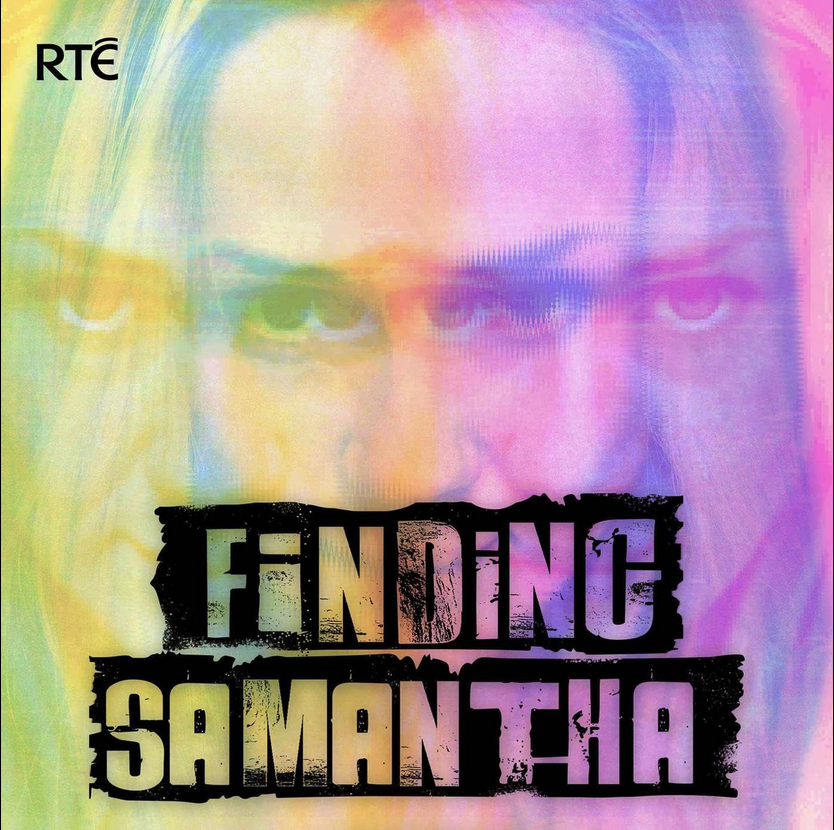
The last of the series – Episode Seven: Who is Samantha Azzopardi? – is not what I expected. I’d hoped loose ends would be tied up, and conclude with Samantha in jail. But she’s still at large, probably conning someone else as you read this.
What’s inspiring is that the producers of this podcast have concentrated not on wrapping up the case, but wrapping up the feelings of concern that we, as engaged listeners, now have for the clearly troubled Samantha. And that’s what makes Finding Samantha a standout true crime podcast in my view.
Our preference these days is to tell the individual story, to veer towards psychological narratives because it’s simpler to damn the villain, identify with the victim. But this podcast ends by asking questions about how we can help Samantha, and canvassing potential therapeutic pathways, like mental health court.
This approach is sociological storytelling. It’s a more ethically responsible way to tell a true crime story because it implicates the listener to ask how and why the characters in stories make their decisions, and may lead us to more enlightened ways to construct societies that encourage compassionate human choices.
Samantha was abused as a child, she may also have a personality disorder, but is a life of crime inevitable? Can Samantha be guided to make better choices in the future? After all, she’s only in her early thirties, and she has plenty of time to either defraud more victims, or choose a life well-lived. There are no definitive answers, but the questions are worth pondering.
Finally, I have to admit that I only began listening to Finding Samantha because Sharon Davis is my friend, and a former ABC RN producer I admire. I’m still not convinced that true crime is my thing, but I hope Finding Samantha has the wide listenership it deserves, unlike many others in the genre, which are often just pulp non-fiction.
Finding Samantha is a seven episode podcast by RTÉ’s Documentary on One. Written, recorded and produced by Sharon Davis (Australia), Tim Desmond (Ireland), Nicoline Greer (Ireland). Sound engineer is Damian Chennells. Executive Producer is Liam O’Brien. Released April – June 2023.


 MASAKO FUKUI
Leave a reply to masakofukui Cancel reply