
Here are some blogs, websites, books, tweets (and tweeters), writers… about aspects of Japan, people, and things Japanese, written in English, for those who want to experience more of Japan than ramen, niseko, and a convenience store view of mt fuji

Walking with Hiroshige is a series of haiku vignettes masquerading as a travel essay. There’s much to learn about the famous artist Hiroshige in this piece by poet Mike Ladd published in Tidings of Magpies, a journal about ‘art, culture, life’. But the words really worth reading and savouring are Mike’s haiku ‘snapshots’ – my favourite –
‘Old people chatting
A supermarket called Life
Free green tea‘
It’s the ‘free green tea’ …
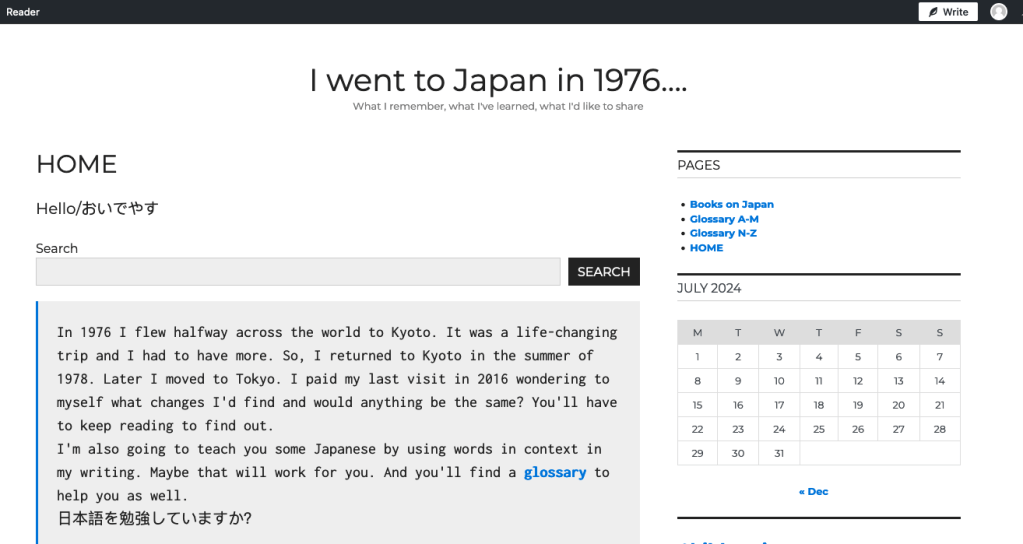
I went to Japan in 1976: I love this simple WordPress blog by someone called Sara A, who went to Japan in 1976…and now blogs about culture, customs, quirky Japanisms. The posts are written with random Japanese words thrown in – it’s a translanguaging blog! She ends each post with a list of English translations of the thrown-in words, helpful for language learners.
Want to know why you shouldn’t eat cucumbers in July in Kyoto, then read this post…

I also love the flat snapshots and the little anecdotes from Sara’s past life in Japan, (especially the ‘only in Japan’ type stories, like this one – Hug 2) mixed with insights and observations that suggest Sara A really loves Japan. Life would’ve been exasperating for a ‘gaijin’ woman living in Japan in the 70s, yet she doesn’t criticise, nor does she overly romanticise. She’s nostalgic, but only to give context, like in this post about ‘asadora‘, the 15 minute morning drama series by public broadcaster NHK. Asadora is about as ubiquitous in Japanese homes as Neighbours (has been) to generations of Aussies.
Sara A lives somewhere in the US now. This is how she describes herself: ‘I have been a teacher, librarian and digital content manager. I’m a grandmother—and a lover of cats and all things Japanese.‘ Hello Sara A!
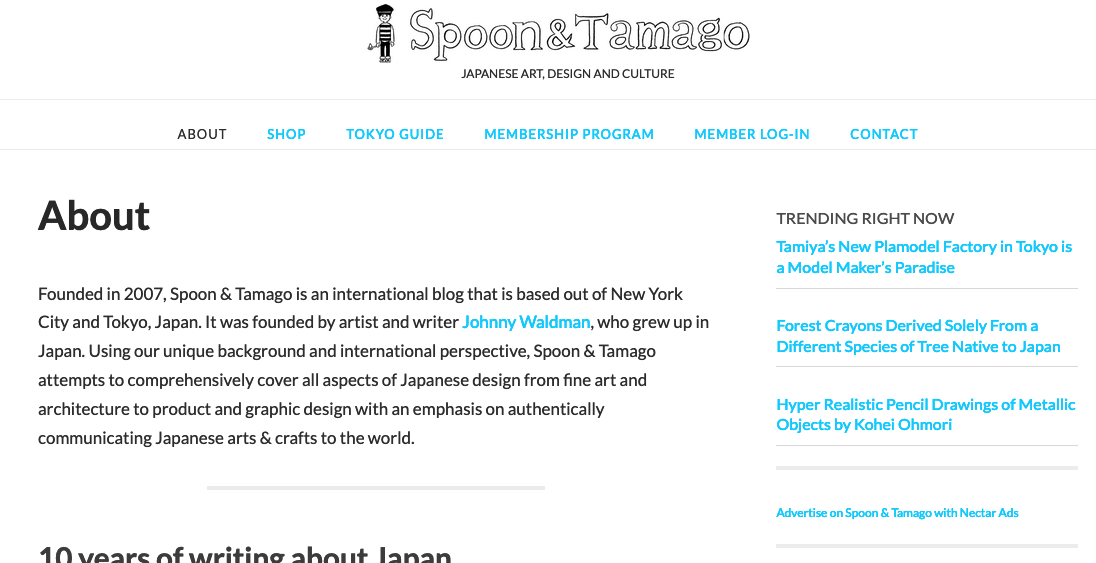
Spoon and Tamago: this is a well-known website about Japanese design, art, culture. The articles cover mainstream subjects, like the new Harajuku complex Harakado, or the spectacular Fukutake Tres, and the Kengo Kuma designed Kiki’s Museum of Literature. But what I like about S&P is that it inspires me to consume Japanese designed products that I never knew I needed. Like this ‘puddle’, which is a ‘vase’ that uses ‘surface tension to create the illusion of a single flower growing from a puddle of water’.
S&P has been online since 2007, so it has a sizeable back catalogue of stories to peruse. Here’s a video from its 10th anniversary in 2017.
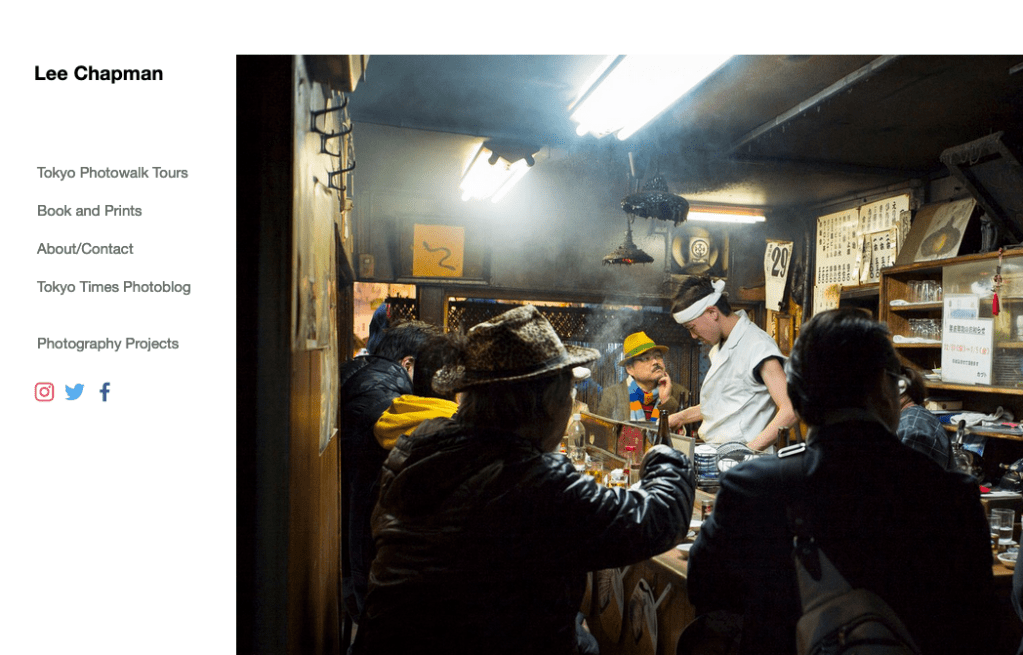
Tokyo Times: It’s been a while since I’ve lived in Japan, but photographer Lee Chapman’s images just transport me back to the Tokyo I know and remember – the suburban backstreets and candid everyday faces. He offers photowalk tours of Tokyo too, worth considering, if you want to avoid the overtourism traps!
Ginzaline: This literary blog by writer Mark Robinson hasn’t been updated for a long time, which is a shame. But I encourage you to wander through it if you have an interest in Tokyo’s ‘shitamachi’, or if you just want to read finely crafted posts that offer a rare glimpse into a Japan that exists beyond the obvious. Photos are evocative without being in-your-face, devoid of attempts to glossily exotize people or places. They are sometimes strange and beautiful.

In 2021, Mark published a book of his photos and bilingual text, or more like a booklet or zine called Tokyo Shores: 36 Views from the Other Side. I occasionally flip through the pages, and randomly read an essay or two. I’m reminded of the quality zine-type publications that many Japanese eateries, retail outlets, and companies publish. I love collecting/hoarding these whenever I visit Tokyo.
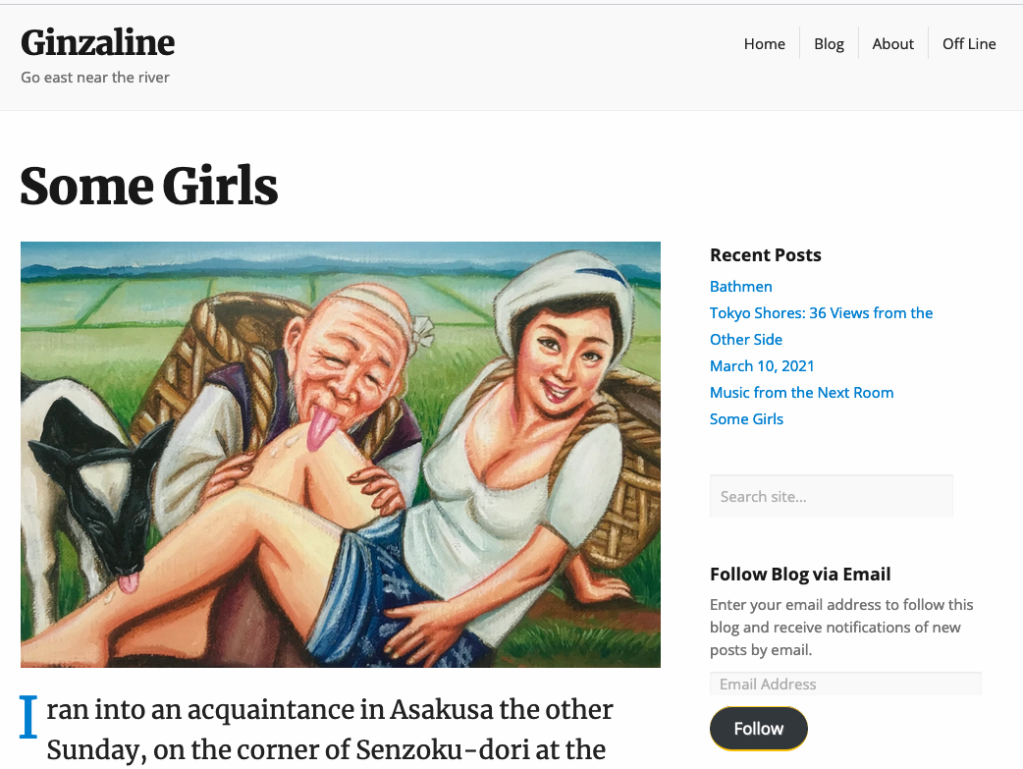
The posts often begin with a serendipitous encounter, like this one with kimono-clad Miki, with whom Mark attends an exhibition of art inspired by ‘brown envelope photographs’. The post is about erotic art and a distinctive brand of Japanese feminism, written by an author who understands that sharing his opinions on the subject would just defeat the purpose of the story.
Mark is Australian, but has been a Tokyoite for decades. Yet he keeps his own views about Japanese life mostly hidden, while writing in the first person. I like that, but mostly admire the skill.
The About page of this website – obviously about Mark – is written in the second person – full of intent; but because the subject is ‘you’ and not ‘I’, the ego feels deflected:
…you want to question, to picture and to write; to post frequently on the enchanting, the ordinary and extraordinary, the odd and, even, the unsettling, the people, the diets, fashions, history and businesses…all of what makes up this multitudinous pocket — what that critic Soeda in the late 20s called this endless current, this human market — all of that about this bottomless great city where incidentally you were born and where you wonder sometimes how things might have been had you also grown up here…
@Mulboyne: I’ve been following this twitter/X account for years, and appreciate it for its eclecticim. @Mulboyne posts a many ‘weird Japan’ type tweets, but there are also newsy items of political or social significance, with links to Japanese news sources that I’ve often found informative or poignant, like this post-Shinzo Abe assassination thread.
What I appreciate most is that a glance at @Mulboyne is like a snapshot of a day in Japan, with posts about hard to miss Summer sales …
…or important groping statistics…
…or everyday (or not so everyday) events…
Monkey, New Writing from Japan: is a soft cover publication you need to read if you’re Japanese literature reading list is stuck at Haruki Murakami (though Murakami’s writings have also been published in Monkey).

‘the best in contemporary Japanese fiction in English translation, as well as other works both old and new by writers, artists, and translators from Japan, England, Canada, and the U.S.’
I think the first Monkey I bought was in Japanese, and I remember discovering the English language versions about a decade ago, which initially were called Monkey Business. That’s where I encountered Japanese authors like Yoko Ogawa, Hiromi Kawakami. Both these female authors, along with Mieko Kawakami, Hiromi Ito, are now well-read in English, and are featured in Monkey.
I’m so pleased to see so many Japanese women authors in translation, and the clever people at Monkey have certainly had a part to play in this trend. What I love most about Monkey is that they elevate the importance of translators.
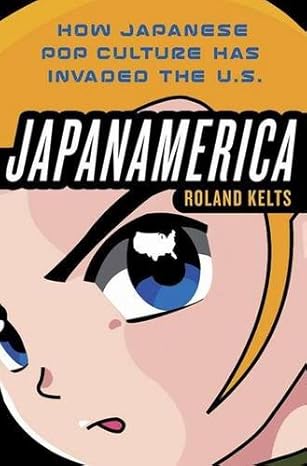
Roland Kelts: is a mixed race journalist, author, academic, and a recognised authority on anime and manga. You may have come across his book – Japanamerica. He’s also part of the Monkey clan, and is an erudite commentator on Japanese culture, society, arts. He blogs here, but keep an eye out for his articles in The New Yorker, The New York Times, Guardian, and other media.

Peter Tasker: is also a commentator on Japanese society, though his interests seem broader – he was formerly a stockbroker and strategist in Japan during the ‘bubble’ years. He writes a lot! on many topics including finance, movies (Oppenheimer for instance), music, politics. I find his insights sobering and always thoughtful. He’s one of those ‘polymath-white-bloke -Asiaphiles’ from another era, who I have to admit, I have an affection for. Friend and mentor, the late Tony Barrell was one. So is Roger Pulvers.
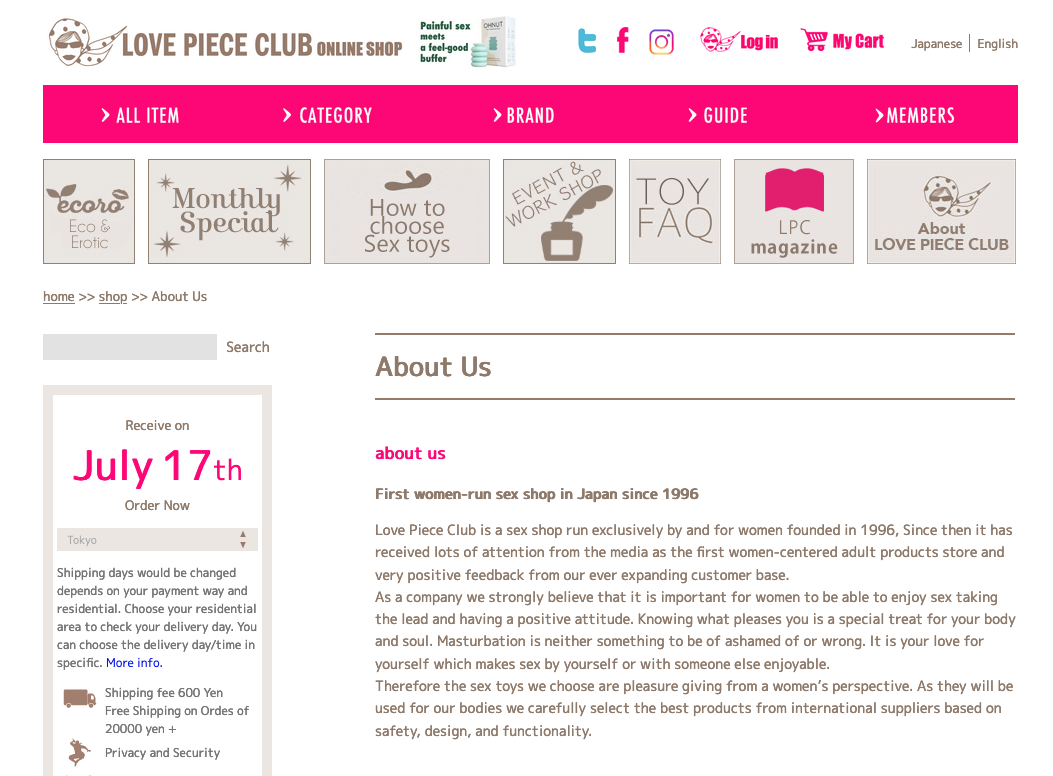
Love Piece Club: I came across Minori Kitahara, the founder of this feminist online sex shop many years ago when I was on assignment in Japan with the aforementioned Tony Barrell. I pressured Tony into visiting Minori in Tokyo so we could interview her for a BBC radio series. I fell in love with the S&M Barbie Minori had on display (with tiny little nipple piercings), but Tony was unimpressed.
I like that this is a women only run sex shop. They take international orders and there is an English and Japanese website.

Hello Sandwich: I don’t know how I found this website but I love the aesthetic, and have been visiting it for over a decade. The blog hasn’t been updated for a while, but the Instagram account is just fabulous! Looks like she also runs tours now, I guess everyone’s getting in on the tourism boom, and why not! I’d love to do one of her tours.
MORE TO COME:

 MASAKO FUKUI
Leave a reply to Sara A Cancel reply